How Do America’s Potatoes Fit into the GlobalFood Supply Chain?
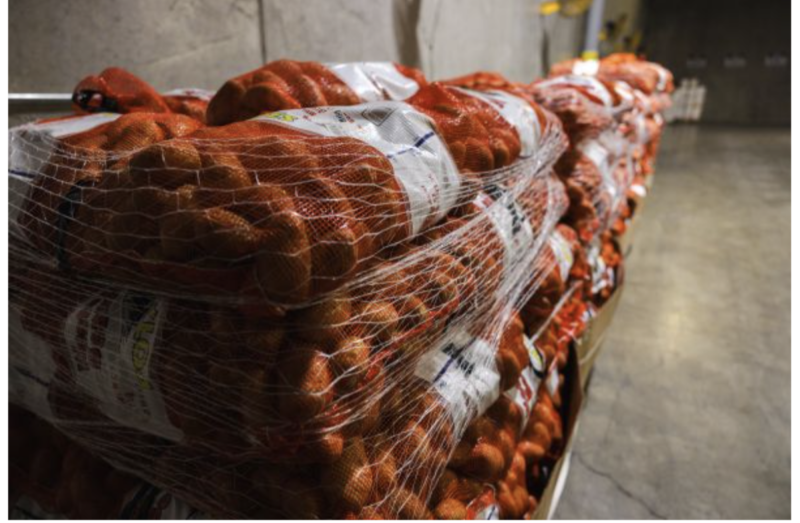
Originally cultivated in what is now Peru nearly 7,000 years ago, potatoes have become one of the dominant staple foods worldwide, with dozens of countries collectively growing tens of millions of pounds of spuds every year. The United States is one of the top producers of this versatile crop, with the states of Idaho and Washington providing the majority, thanks to their mild climates and vast swaths of nutrient-rich farmland.
In the following blog post, we’ll discuss how the potatoes produced in the United States serve not only their own country, but also many others in a global food supply chain that billions of people across the world depend on. We’ll also look at the journey of this ancient crop from its humble beginnings in the New World to its current role as a critical food source for populations worldwide, essential for providing crucial nutrition to people from every inhabited region of the planet.
Potatoes: An Origin Story
The plant that we now know as the potato is the result of thousands of years of selective breeding by farmers, both ancient and modern. In fact, the plant is believed to have gotten its start as a hybrid between an early tuber called the etuberosum and the tomato plant nearly nine million years ago, an evolutionary accident that would have implications for the global food supply even today.
The hybridization process is what allowed this now-legendary crop to thrive in the wildly differing climates of the various lands surrounding the Andes Mountains, where it was eventually discovered and cultivated by ancient peoples there. Over time, these early farmers bred hundreds of different varieties of potatoes, and by the time of the Inca Empire in the 15th century, advanced agricultural and storage techniques (including a method of freeze drying!) had been developed for this staple food source.
From The Andes Mountains to The Rest of the World
By the 16th century, potatoes were an essential part of the diet of thousands of indigenous peoples in and around the Andes. It was at this time that Spanish conquistadors began to bring this strange new crop back to Europe: first to Spain and then to Ireland. While some early European farmers saw potential and embraced the new crop, others weren’t so sure. Decades would pass before the potato was fully established as a staple crop in every European country. Soon after potatoes were carried back to the New World, they began being grown in the American colonies, long before the United States was established.
Even in the sixteenth and seventeenth centuries, a global food supply chain existed, and the potato eventually became a major part of that chain, a role it has held ever since. Cargo ships carried potatoes to Asia, Africa, Australia, and elsewhere over the next two hundred years, gradually establishing it as the major global food staple it is today.
Potatoes Versus Other Staple Crops
Five hundred years after they first left Peru, potatoes are now the world’s fourth most important crop, behind only rice, wheat, and corn (maize). Potatoes can grow in climates where these other crops cannot. For example, rice requires warm and very wet (nearly flooded) conditions to grow, while potatoes do not require nearly as much water to thrive. By the same token, wheat requires more water than potatoes do, and corn must be planted much more deeply in the soil, making it more difficult to produce in the first place. So, while potatoes may be fourth overall in terms of popularity and ubiquity, they remain number one in many areas due to their relatively lower demands on local resources.
Another major reason why so many countries adopted potatoes in a relatively short period, historically speaking, is their adaptability to a wide variety of climates and soil conditions. While temperature extremes tend to cause them to struggle, potatoes are capable of thriving in many temperate areas, requiring only shallow soil with fewer nutrients than their closest competitors. They are so versatile that scientists believe they could even be grown on Mars, a concept memorably depicted in the science fiction novel (and film) The Martian.
The Role of Potato Production in the United States
In the modern world, 150 countries now grow potatoes, and the tuber’s importance is only increasing, as a changing world becomes more and more dependent on the availability of resource-efficient, nutrient-dense foods. Climate changes and increasing strains on water and healthy soil mean that farmers must now produce more with less. Fortunately, this is a need that potatoes are able to meet.
The challenge of ensuring worldwide food security by improving the outputs for potato crops is one that has been accepted by farmers in the United States, which has long been one of the world’s biggest suppliers of this essential crop. Now, American potato farmers, such as those in Washington state, are working to revolutionize the agricultural industry further by implementing new technologies and advanced methods for producing, packaging, transporting, and distributing potatoes worldwide.
The United States is leading the charge into our agricultural future by introducing automated farming equipment; efficient new methods of planting, irrigation, and harvesting; and GPS technologies to further improve the output and minimize the environmental impact of potato farming.
Potatoes For Everyone, Everywhere
The world we live in depends heavily on potatoes, due not only to their adaptability but also to their nutrient density and their adaptability in the kitchen as well. This staple crop can provide an array of macronutrients and micronutrients that few other foods can compete with, with protein, fiber, carbohydrates, and essential vitamins such as vitamin C and the range of B vitamins. Cultures everywhere have adapted this nutrient-rich plant to meet their culinary requirements, with thousands of delicious recipes existing that can be made to anyone’s tastes.
The United States now ships hundreds of millions of dollars’ worth of potatoes, both fresh and processed, to diverse regions around the world. This means that the potato farmers here are a major part of an intricate global supply chain that has become increasingly important on the world stage. Many of these farmers work small farms that have been in the same families for generations. You can do your part to support small agricultural operations and food security worldwide by visiting your local farmers’ market and supporting your local potato farmers today.
______________________________________________________________________________
This is a contributed post